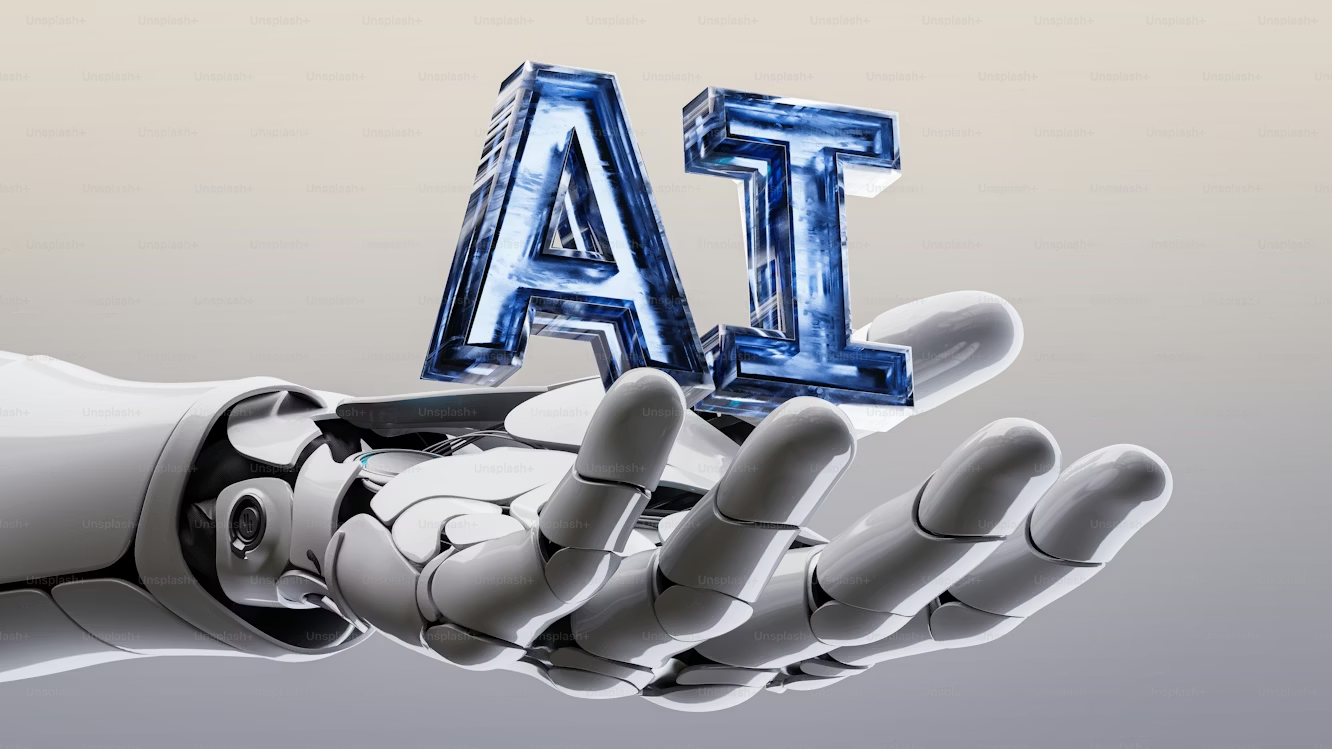
Artificial intelligence is no longer a future concept—it’s here, and employees know it. While leaders often view AI as a productivity booster, many employees see it as a looming threat. Fear of job loss, deskilling, and constant surveillance is quietly shaping workplace morale. When these fears go unaddressed, they don’t lead to innovation—they lead to disengagement, resistance, and burnout.
One of the biggest drivers of AI anxiety is uncertainty. Employees read headlines about automation replacing jobs but receive little clarity about how AI will be used in their own roles. Without context, workers fill the gaps with worst-case scenarios. This fear is compounded when AI tools are introduced without explanation, training, or employee input, making workers feel powerless in decisions that affect them.
Managers play a critical role in changing this narrative.
Step 1: Transparency. Leaders must clearly explain why AI is being adopted, what problems it is meant to solve, and—most importantly—what it will not replace. When employees understand that AI is intended to eliminate repetitive tasks rather than eliminate them, fear begins to give way to curiosity and trust.
Step 2: Empowerment through skill-building. Employees are far less fearful of AI when they feel capable of working alongside it. Managers should invest in training that helps employees use AI tools confidently and ethically. Framing AI as a career accelerator—one that enhances human judgment, creativity, and impact—signals that the organization is invested in its people, not just its technology.
Step 3: Managers must lead with empathy. Fear is a natural human response, not a weakness. Creating space for honest conversations, questions, and even skepticism shows employees they are seen and valued. When leaders treat AI adoption as a shared journey rather than a top-down mandate, they don’t just reduce fear—they build a culture of trust, adaptability, and resilience.
In the end, employee fear of AI isn’t about technology—it’s about trust. When managers communicate openly, invest in skill development, and lead with empathy, AI shifts from a perceived threat to a powerful tool. Employees don’t need reassurance that AI is coming; they need confidence that they still matter.